How to Keep Gold and Silver Chafing Dishes Looking Bright
Quick answer: Wipe each dish with a soft cloth after every event, rinse off any soap, and dry it completely before it goes into storage. Skip abrasives, polishes and strong cleaners on gold, silver and jet black finishes unless any instructions that came with your dish say they are fine.

A buffet with bright, clean dishes looks better in the room and in photos. Polished silver, gold and jet black finishes can show fingerprints, drips and water spots. The advice below is general good practice. Our listings do not say how any of the finishes are made, so if any instructions that came with your dish or fuel differ, follow those.
Fingerprints and everyday marks
Let the dish cool completely before you wipe it. Then wipe with a soft, clean, lint-free cloth dampened in mild soapy water, and dry with a second clean, soft cloth. If you can see a grain in the metal, wipe along it. For the full wash after an event, follow How to Clean a Chafing Dish, Step by Step.
Wash glass lids and glass dishes once they have cooled. Never put hot glass under cold water or on a cold, wet surface, because a sudden temperature change can break it. Stop using glass that is chipped or cracked.
Water spots and hard-water marks
Water spots form when water dries on the surface, and mineral-heavy water leaves more of them. Rinse in clean water and dry straight away with a towel. For marks that are already there, wipe again with a damp, soft cloth and dry the spot.
A mild mix of white vinegar and water is a common wipe for plain stainless steel. Leave it on for a few minutes, then rinse well and dry. Our listings do not say how the gold, silver or jet black finishes are made. Skip vinegar on all three unless your instructions say it is fine. If they do, test a hidden spot first and keep the contact short. Salt and vinegar together can pit stainless steel, so rinse any pan that held salty food first.
Never mix bleach with vinegar, ammonia or any other cleaner. The mixture can release toxic gas.
Heat discolouration
Heat can leave a rainbow or bluish tint on plain stainless steel. Cookware makers say a vinegar wipe along the grain, then a rinse and a dry, usually clears it from uncoated pans. Our listings do not describe our finishes that way. On a gold, silver or jet black finish, a tint may mean something else. Check your instructions and test a hidden spot before you try anything.
To lower the odds, never heat a dish with nothing in it. If your dish uses a water pan, never light the fuel with the pan empty. Top up the water as it evaporates, but only after you put the flame out and let the dish settle. Follow the instructions for your dish and fuel. Our guide to water pans, fuel and keeping food hot covers safe set-up.
Light scratches
Some marks that look like scratches are water marks or residue. Wipe with a damp, soft cloth, dry the spot, and look again under good light. Fine scratches often come from abrasive pads, scouring powder and metal rubbing on metal. Abrasives can scratch or dull some coloured and highly polished finishes, so do not rub at a scratch with an abrasive paste.
Gold, silver and jet black finishes
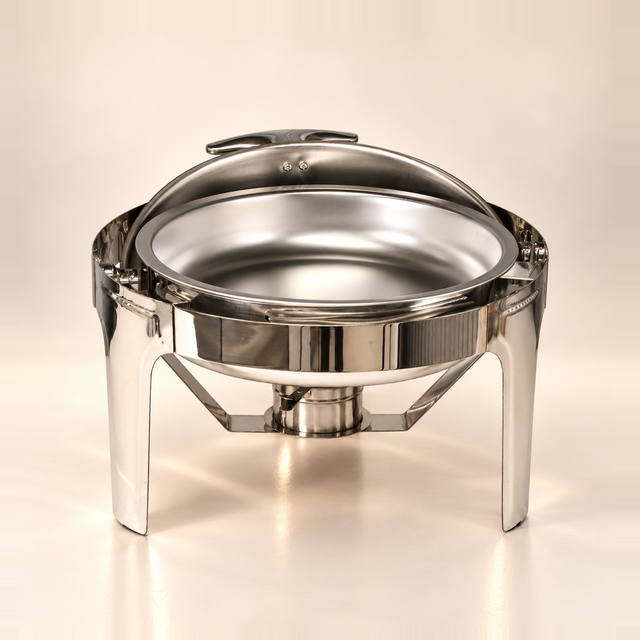
Our listings describe the finishes as gold, gold mirror, polished silver and jet black. They do not say how the colour is made, and makers differ in what their finishes tolerate.
- Polished silver. A wash and a dry buff is usually enough. If you want more shine, check your instructions and test a hidden spot first. We do not name a polish, because we cannot say which ones suit these finishes.
- Jet black. Use mild soap, warm water, a soft cloth and a dry buff. Skip polishes and abrasives unless your instructions say otherwise.
- Gold and gold mirror. Skip polish unless your instructions call for it. Gold finishes can be sensitive, so avoid polishes, abrasives, bleach and strong acids. The same caution suits gold dishes and utensils.
For any gold, silver or jet black item, work in this order.
- Read any instructions that came with the item, and use the cleaner they name. Test a hidden spot first, such as the underside of a leg or base, with the gentlest method you plan to use.
- Use mild soap, warm water and a soft cloth. Rinse with clean water, then blot or buff dry straight away.
- If a mark stays, stop there and check with your supplier before you try anything stronger.
Handling and set-up at events
Do your final buff before you fill any water pan and light the fuel. Handle cool, unlit dishes with clean gloves or a clean cloth to keep skin oils off the finish. Once the fuel is lit, treat the dish as hot and do not move it.
During service, leave the dish alone. Wipe drips and fingerprints only after you have put the flame out and the dish has cooled. Keep cloths, napkins and paper well away from any lit flame.
Give each dish a serving utensil and a clean place to rest it between servings, so the utensil is not left on the table or on the dish.
What to skip on these finishes
- Steel wool, scouring pads and scouring powder. They can scratch, and steel wool can leave particles that rust.
- Bleach, strong acid or alkali cleaners, and oven cleaner. If you need to sanitize food-contact parts, follow your health unit's rules and the sanitizer label, and see the cleaning guide.
- Silver dips and tarnish removers. Their labels often warn against use on stainless steel and lacquered metals.
- Any polish, wax, oil or spray that is not labelled safe for food-contact surfaces.
- Soaking, and full immersion of the frame or the whole dish. Some makers say to use a damp cloth and not immerse the frame.
Storing between events
Store dishes and fuel holders only when they are fully cool and completely dry. Put a soft cloth between pieces so finishes do not rub together. Our guide to storing and transporting chafing dishes covers the rest of the packing.
Common questions
Can I put my chafing dish in the dishwasher?
Our listings do not say dishwasher safe. Hand wash, and follow any instructions that came with your dish. Hand washing is the cautious choice for any finish you want to keep bright.
Can I use a stainless steel cleaner on a gold dish?
We would not. Gold finishes can be sensitive to polishes and strong cleaners. Start with mild soap, warm water and a soft cloth, and ask your supplier if you are in doubt.
Will light scratches polish out?
Do not count on it. A scratch is easier to prevent than to remove. If a dish you bought from us has a mark you are unsure about, call or message us on WhatsApp at 516-675-9041.
Where to go next
For the full routine before, during and after an event, use the Chafing Dish Care Checklist. If you are adding to your set, you can browse all chafing dishes.