Chafing Dish Not Keeping Food Hot? Common Problems and Fixes
Quick answer: Common causes are food that was not hot enough going in (or hot water, if your dish has a water pan), a weak flame, or a lid that does not close properly. Work through the checks below. Stop using any dish that is cracked or unsteady, and any fuel can that leaks.

This guide is general good practice. Always follow any instructions that came with your dish and fuel.
Food is not hot enough
A chafing dish holds heat, so the food has to start hot. Health Canada says hot food should stay at 60°C (140°F) or hotter.
- Heat the food first. Bring cooked food that has been chilled up to at least 74°C (165°F) in an oven or on a stove. Check it with a probe thermometer, then move it into the dish.
- Start with hot water. If your dish has a water pan, fill it with hot water to the fill line or depth in your instructions.
- Warm the dish. Some makers suggest warming the dish before you load it. Follow your instructions for how long.
- Check the fuel. Use fuel made for chafing dishes, in the type and amount your instructions call for.
- Keep the lid closed. Open it only to serve.
- Block drafts. Set the dish away from open doors, fans and air vents before you light it, and do not move it once it is lit.
Once service starts, check the food temperature with a probe thermometer on a regular schedule, and more often if the dish is struggling to hold heat. Do not top up a dish in use. Swap in a fresh pan of hot food instead. Public health guidance says to throw out hot food that has spent more than two hours in total between 4°C and 60°C, or one hour on a hot day. If you cannot tell how long, throw it out. If food that guests have already served from drops below 60°C, throw it out instead of reheating it. Our safety guide explains the one case where reheating is allowed.
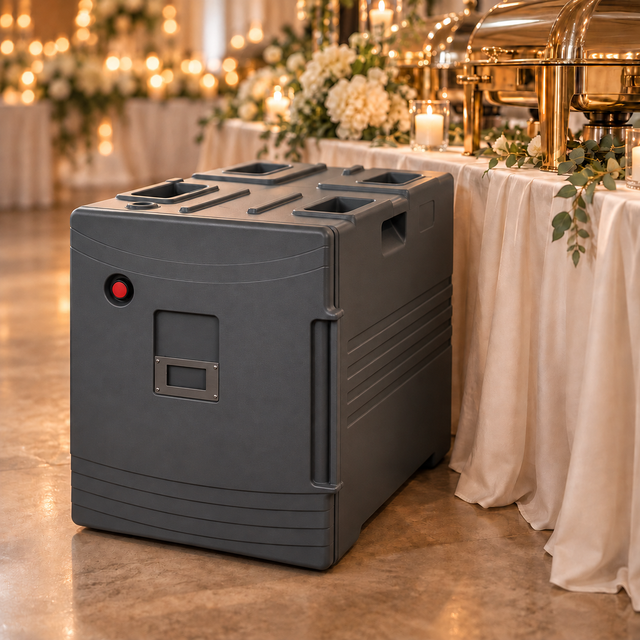
An insulated food pan carrier helps keep food at temperature in transit. Load the food hot, and check it is still 60°C or hotter when you unload it.
The flame goes out or burns weak
Let the dish and the fuel can cool before you replace or relight fuel. Health Canada warns that adding fuel to a hot or burning fire pot, fondue pot or other product that uses liquid or gel fuel can cause flame jetting. The same caution makes sense here. Never pour fuel over a flame.
- Seat the can first. Put the can in its holder, in its final spot, before you light it.
- Give it air. Make sure air can reach the flame and nothing blocks the fuel holder, as your instructions show. Keep the holder area clear of spills, debris and anything that can burn.
- Know your fuel. Liquid and gel fuels differ. Follow the label for lighting, any lid or regulator, and burn time.
- Swap spent cans. Let a used can cool fully first. Never light one can from another.
Never leave a lit dish unattended, and keep the flame away from paper, fabric and decorations. Fuel makers warn that burning fuel gives off carbon monoxide, so keep the room ventilated. Some venues limit open flame, so check with the venue or your local fire department. Our chafing dish safety guide covers fuel and hot holding.
If your dish uses a water pan, the water boils away
In a dish with a water pan, steam from the hot water carries heat to the food pan. The water boils off over a long event, so check the level often and never run the dish with the water pan empty. To top it up, put the flame out and let the dish settle, then add hot water slowly from a jug with a spout, because the steam is hot.
The lid sticks or will not stay open
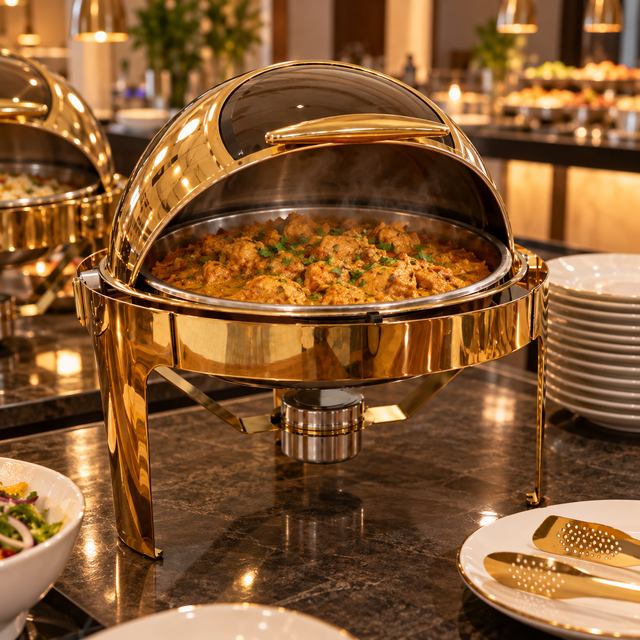
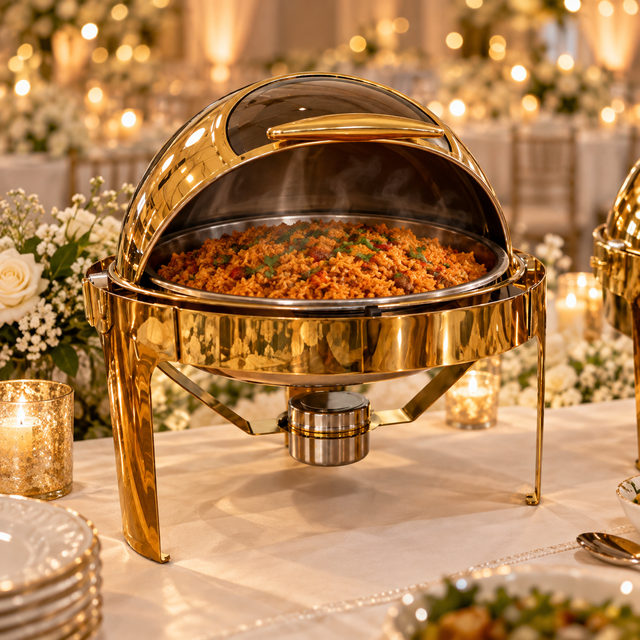
Do not force it. Forcing can bend a part or crack glass. The Rolling Top Line has a roll-top lid. The Crystal Crown line and the Luxury Dining rectangle and round dishes have a glass lid that lifts on hinges. On the hanging dishes, a dome lid hangs from the frame or stand, so check that it hangs securely. These steps suit roll-top and hinged lids.
- Put the flame out and let the whole dish cool.
- Wipe the lid, its edges and any hinges or moving parts with a soft damp cloth.
- Do not soak the hinges. Wipe off any soap, then dry them well.
- Open and close the lid slowly. If it still catches, look for a bent, loose or damaged part and stop there.
Avoid steel wool, scouring pads and abrasive cleaners. Hot glass can break when it meets a sudden temperature change, so let a glass lid cool before washing. See how to clean a chafing dish.
Marks on the finish
Cookware makers say rainbow tints on stainless pans come from high heat and usually wipe off with vinegar. That advice is for plain stainless. Your dish has a gold, silver or jet black finish, and finishes vary. Start with mild soap, warm water and a soft cloth, then dry it right away. Ask the maker or us before you use vinegar, polish, scouring powder or bleach on a coloured finish.
For rust-coloured spots, care guides for stainless cookware warn about steel wool, which can leave particles that rust, and about salt, bleach and strong disinfectants. Wash the spot gently, rinse and dry fully. As good practice, if spots keep coming back, or the surface feels rough, pitted or flaky, stop using that pan for food. Our gold and silver care guide goes further.
Warping and a wobbly frame
Let metal cool before you wash it or put it in water, because putting hot metal straight into water can warp it. Set the dish on a flat, level surface, away from the table edge. Check the legs, handles, hinges and fuel holders for looseness before every event. Never move a dish while its fuel is lit. Our care checklist puts these checks in order.
When to stop using a dish or fuel can
- A fuel can is leaking, or fuel has spilled near the flame.
- Glass is chipped, cracked or deeply scratched.
- A pan rocks, cracks, has an open seam, or has a pitted or flaking surface.
- A handle, hinge, leg or fuel holder is loose or damaged.
- The frame still wobbles on a level surface.
If a fire starts, call 911 first, even if it is small. If fuel is leaking from a lit dish, put the flame out with the can lid or a snuffer, as the fuel label directs, only if you can do so safely. Never blow it out, and do not throw or pour water onto burning fuel. Follow the fuel label and its safety data sheet, then let everything cool. If burning fuel has spilled, has reached anything else or a fire is growing, do not fight it. Get everyone out. If you are unsure whether a dish is safe, message us on WhatsApp at 516-675-9041 with a photo and the dish name. We will do our best to help you work out the next step.
Common questions
Can I use a chafing dish to reheat food?
No. Toronto Public Health says chafing dishes are not cooking equipment. Reheat food in an oven or on a stove first, then move it into the dish.
How long can food stay in a chafing dish?
Hot food needs to stay at 60°C or hotter, and heat varies by fuel, dish and room. Check the food temperature itself with a probe thermometer.
Do these tips apply to the Crystal Clear home dish?
Some do. The Crystal Clear has a clear glass dish in a pierced gold frame, a tinted glass lid and a burner stand underneath. Start with hot food, keep the lid closed and check the food temperature. For set-up and fuel, follow any instructions that came with the burner stand. The water pan and fuel can steps above may not apply to it.
Browse all our chafing dishes, or send us the details on our wholesale page if you need several.