How to Clean a Chafing Dish, Step by Step
Quick answer: Put the flame out and sort the leftovers. Keep only food that stayed hot and that guests did not serve themselves from, and refrigerate it within two hours of when it stopped being held hot (one hour on a hot day). Throw out the rest. Let the empty dish cool, then take it apart. Wash the pans with a soft sponge and warm soapy water, wipe the lid, frame and stand with a damp cloth, and let every part dry completely.
This is general good practice. Follow any instructions that came with your dish and fuel where they differ.
Put the flame out and sort the leftovers
When service ends, put the flame out the way your fuel instructions say. Never blow it out. Leave the frame, fuel holder and any water pan where they are while they cool, and do not lift a pan that sits over hot water.
Health Canada says to throw out cooked food left at room temperature for more than two hours, or one hour on a hot day. Count the time the food spent below 60°C during service as well as after service ended. Food that sat on a self-serve line is risky to keep, so keep only food that stayed hot and that guests did not serve themselves from. If you are not sure, throw it out.
Use a serving spoon to move what you are keeping into clean, shallow containers so it cools quickly. Then refrigerate it within that time.
If you run a licensed food business, follow your public health unit's rules. Ontario's food premises rules say food already served to a customer must not be served again, with limited exceptions, so ask your health unit about buffet food before you keep anything to re-serve.
Let the rest of the dish cool
Let the frame, fuel holder and any water pan cool completely before you lift, move or wash anything. Hot metal can warp if it goes straight into water. If there is water in a water pan, wait until the outside of the pan is cool to the touch, and do not test hot water by hand. For fuel and water pans during service, read our chafing dish safety guide.
Take the dish apart
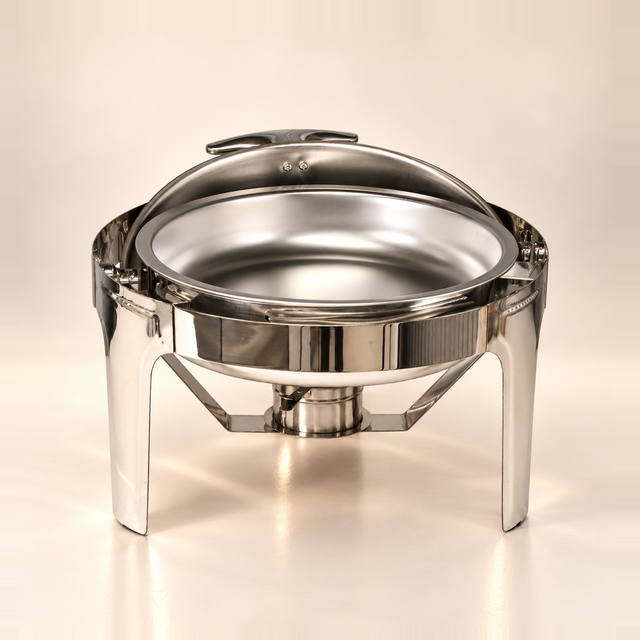
Do this once everything has cooled. Parts vary by dish and may include a food pan, a water pan, a frame, a lid, and a fuel holder or burner stand.
- Take out any fuel cans or burners. If one still has fuel, cap it if it has a cap, and store it as the label says, away from heat and flames.
- Open or lift off the lid, whichever your dish allows.
- If your dish has a water pan, tip the water out slowly over the sink, away from your face.
Wash the pans
- Scrape any food left on the pans into the garbage.
- Wash the food pan and any water pan in warm water with a little dish soap, using a soft sponge or cloth. If you can see fine lines in the metal, wipe in the same direction as the lines.
- Rinse with clean water and wipe off all the soap.
If a pan held salty or acidic food, such as tomato sauce, rinse it as soon as it has cooled. If your pans are stainless steel, long contact with salt or acid can pit the metal.
Burnt-on food
If food is stuck on a plain stainless steel pan, soak it for a short time in warm soapy water, then work at the spot with a soft sponge. Do not leave a pan soaking overnight, and never soak it in salty water or bleach.
A paste of baking soda and water is a common gentle option on plain metal. Try it on a small hidden area first.
Skip the soak on any gold, silver or jet black surface, including the inside of a pan if it is coloured, because we cannot say how those finishes are made. Use only warm soapy water and a soft sponge unless any instructions that came with your dish allow more. Test a hidden spot first.
Glass lids and roll-top lids
Glass lids
The Crystal Crown dishes and the round and rectangle Luxury Dining dishes have glass lids on hinges. The Crystal Clear has a glass lid and a glass dish.
Glass can break when it meets a sudden temperature change, so let it cool to room temperature before you wash it. Never run cold water over a hot lid or set it on a cold or wet counter. Use a soft sponge, because scratches from harsh scrubbing can weaken glass. Do not use a lid that is chipped, cracked or badly scratched.
Keep water out of the hinges. Wipe them with a damp cloth, remove any soap residue and dry them.
Roll-top lids
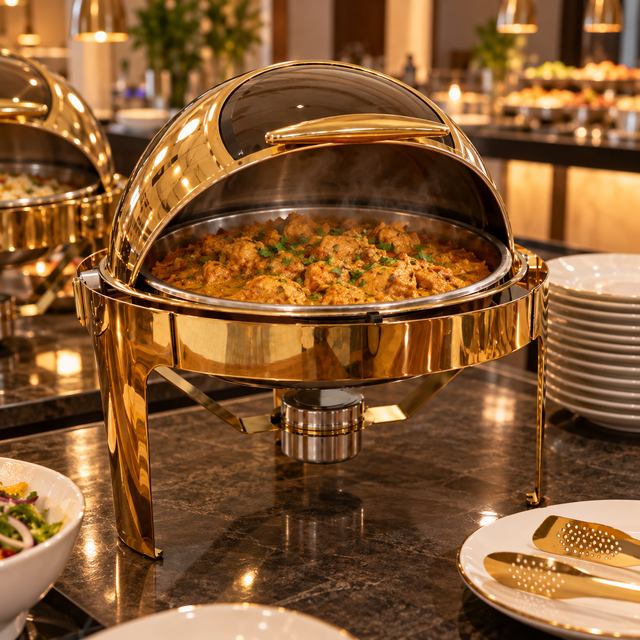
The Rolling Top Line lids roll back and have a viewing window. Some makers' manuals say not to immerse a roll-top lid, so wipe the lid with a soft cloth and warm soapy water, then a clean damp cloth, and dry it.
The frame and the fuel holder
Wipe the frame and stand with a soft cloth and warm soapy water. Do not immerse the frame or use abrasive pads on it. Ornate or pierced metalwork, like the frames and bases on the Luxury Dining hanging dishes and the Crystal Clear, can hold onto soap, so check for suds. For finish care between events, see our gold and silver care guide.
Most of our dishes heat from a fuel holder underneath, and the Crystal Clear uses a burner stand. Once it has cooled and any fuel is out, wipe away loose crumbs and spills with a damp cloth and dry it. For soot or fuel residue, follow any instructions that came with your dish and fuel, because no single method suits every holder.
What to avoid
- Steel wool and hard-bristle brushes. They scratch, and steel wool can leave iron particles that rust.
- Scouring powder and abrasive pads. They can scratch or dull coloured and highly polished finishes.
- Chlorine bleach as a soak. It can pit and corrode stainless steel. Never mix bleach with vinegar, ammonia or glass cleaner, because the mix can release toxic gas.
- Oven cleaner and strong acid or alkali cleaners. Keep them away from your dishes.
Rinse and dry
Rinse every part with clean water and wipe off drops of water with a clean cloth. Let each part air dry completely before you pack it away. Our guide to storing and transporting chafing dishes covers what comes next.
If you run a food business, follow your public health unit's rules for sanitizing. In Toronto the steps are scrape, wash, rinse, sanitize and air dry. Use any sanitizer exactly as its label says, and rinse it off if the label says to. Use chlorine only at label strength and contact time, never as a soak.
Can you use a dishwasher?
We do not list any part of our dishes as dishwasher safe, so wash by hand. If any instructions that came with your dish allow a part in a dishwasher, follow them. If you are not sure, call or message us at 516-675-9041.
Common questions
Can I put the whole chafing dish in the sink?
Take it apart first. Some manuals say never to immerse the frame or the whole unit, so wash the pans and wipe the rest with a cloth.
How soon after the event should I clean it?
The same day is best, because dried-on food is harder to shift. If you cannot wash right away, sort the leftovers, then scrape and quickly rinse the pans once they have cooled.
What should I do with a chipped or cracked glass lid?
Stop using it. Call or message us on WhatsApp at 516-675-9041 to talk through what to do next.
The Chafing Dish Care Checklist covers what to do before, during and after each event. Browse our chafing dishes.